A common question from the licensing side of the music industry is: after a model has been trained and used to generate new audio, how can you possibly trace which source recordings influenced it? The model does not contain those recordings. The output does not directly copy them. What is there to find?
The answer involves two areas of music information retrieval that have developed independently over the past decade: audio source separation and spectral fingerprinting. Together, they form the analytical foundation for training provenance attribution. This piece describes how each method works, where they intersect in the attribution pipeline, and where the hard technical limits currently are.
How Training Influence Persists in Generated Audio
The first thing to understand is why training influence is detectable at all. When a generative audio model is trained on a corpus of recordings, it learns a parametric representation of the statistical properties of that corpus. Those properties include spectral density distributions, rhythmic periodicity patterns, harmonic co-occurrence probabilities, and the micro-timing characteristics that define how specific production styles sound.
These properties are not stored as a copy of the original recording. They are encoded in the model weights as learned patterns. But when the model generates new audio, it draws on those patterns. The generated output therefore carries statistical signatures that derive from the training corpus. The question is whether those signatures are recoverable and can be traced back to specific source recordings.
The answer depends on the size and composition of the training corpus. A model trained on a very large, diverse corpus will show weaker per-recording signatures than one trained on a smaller, more stylistically homogeneous set. The signal is real in both cases; the signal-to-noise ratio differs. Attribution analysis on outputs from a narrowly trained model will typically produce higher confidence matches than analysis of outputs from a model trained on millions of recordings.
Source Separation: Decomposing the Generated Track
Source separation is the process of isolating distinct audio components from a mixed signal. In the context of consumer music, it is used to separate vocals from instrumentals, or to isolate individual instruments for remixing. The underlying technique, in its modern deep learning form, involves training a model to predict individual source components from their mixture, typically using a spectrogram representation as input.
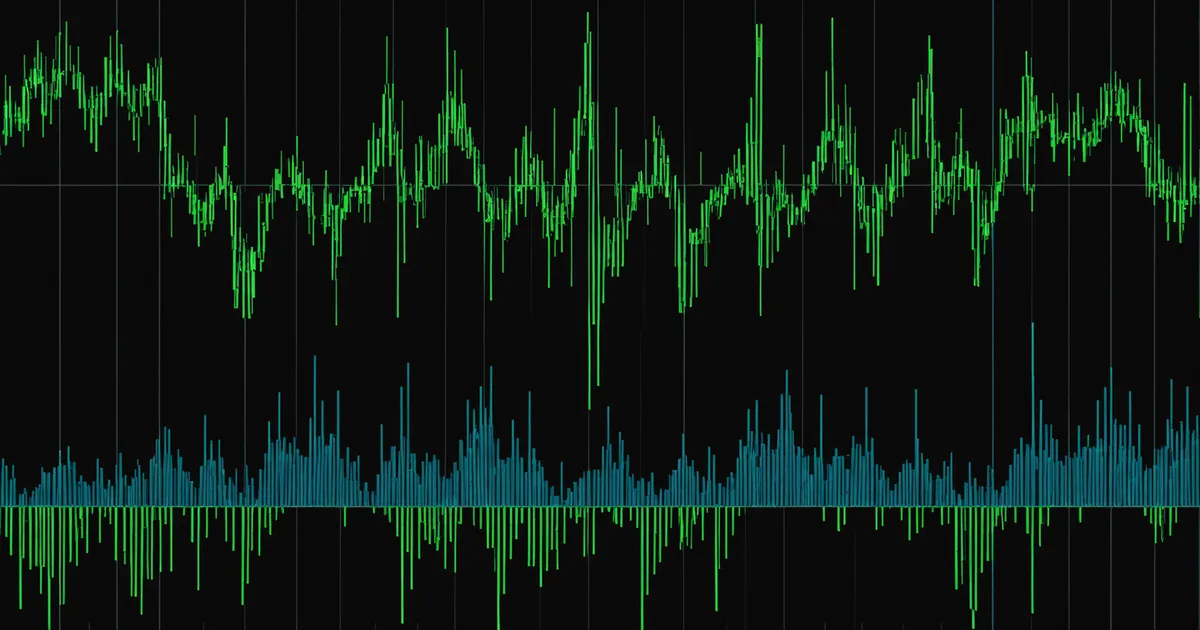
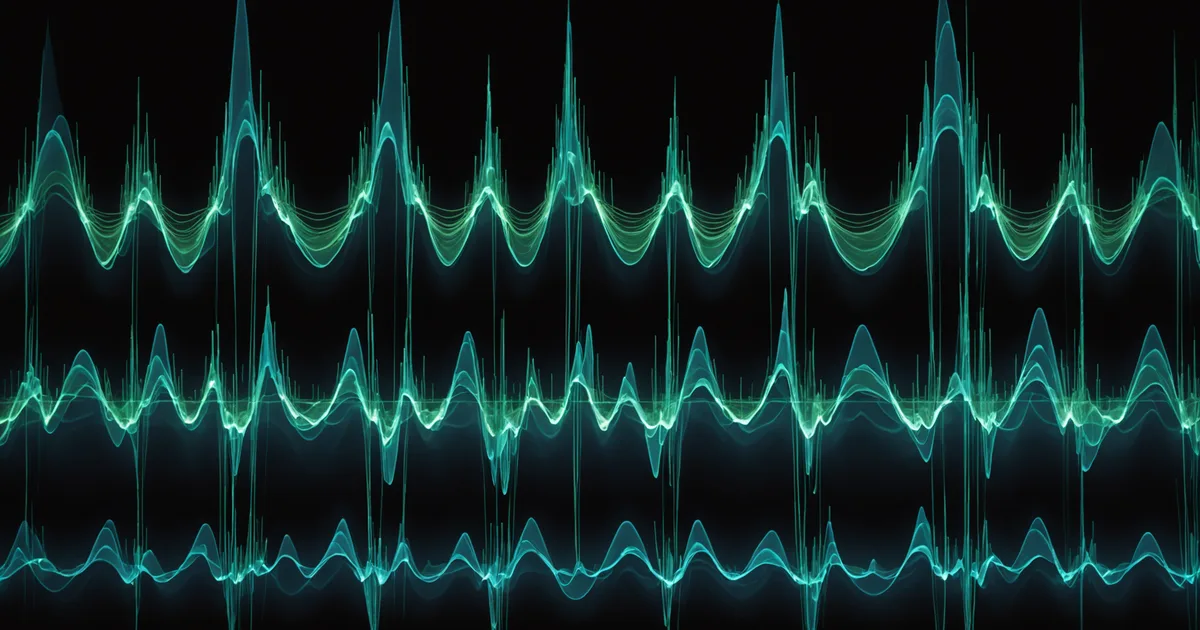
In training provenance analysis, source separation serves a different function. We are not trying to separate the output into musical components. We are trying to decompose it into spectral sub-signals that carry signatures from the training corpus. The separation model is looking for patterns that correspond to how specific recording sessions, production environments, or instrument chains encode themselves in the frequency domain.
Think of it this way hypothetically: if a training corpus included recordings from a specific era of studio production that used a characteristic analog compression chain, that chain's spectral signature would appear in model outputs that draw on those recordings. Source separation can isolate that signature as a sub-signal even when the generated track sounds like nothing in the original corpus. The signature is not in the surface audio; it is in the lower-level frequency structure.
Spectral Fingerprinting: Matching Signatures to Catalog Entries
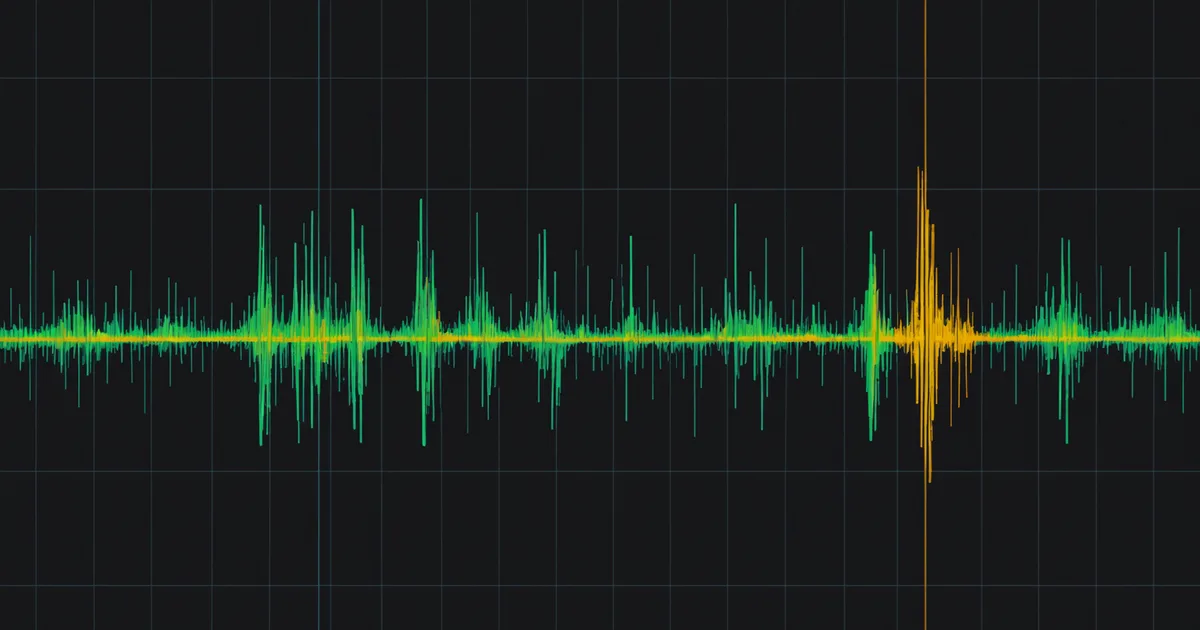
Once source separation has produced candidate sub-signals, spectral fingerprinting matches those signals against a catalog database. Acoustic fingerprinting in its traditional form creates a compact hash representation of a specific recording's spectral characteristics. Audio search systems use this approach to identify songs by a few seconds of recording. This is fundamentally an identification problem: does this audio match this exact recording?
Training attribution fingerprinting is an influence detection problem, which is analytically distinct. Rather than matching an exact recording, the fingerprint comparison is looking for statistical similarity in spectral patterns. The comparison is probabilistic, not binary. A match returns a similarity score and a confidence level, not a yes/no identification.
We are not claiming this is equivalent to finding a direct copy of a recording in the output. It is not. The claim is more precise: that specific spectral patterns in the generated output have a measurable probabilistic relationship to specific recordings in the training catalog. The strength of that relationship is what the confidence score quantifies.
The Pipeline in Sequence
The attribution pipeline that we have built combines these two methods in sequence. An incoming generated track is submitted via API. The first analysis stage runs source separation to identify candidate spectral sub-signals. These candidates are then compared against the catalog database using fingerprint matching, producing a ranked list of catalog recordings with similarity scores. The rights holder identifiers associated with those catalog recordings are retrieved from the database and returned as part of the attribution result, along with confidence scores and a recommended royalty weighting.
The royalty weighting recommendation is a function of the confidence score and the relative representation of that recording's spectral signatures across the analyzed output. It is a starting point for rights administration, not a final determination. The legal framework for what those weights mean in a specific jurisdiction is still developing. The technical output is a factual record of influence; the legal interpretation of that record is a separate layer.
Where the Technical Limits Are
The approach described here works most reliably when the training corpus has moderate to high representation of recordings from a reasonably defined catalog. It becomes less reliable at very large training corpus sizes with uniform distribution, because individual recording signatures are diluted to the point where they approach the noise floor of the fingerprint comparison. We have not solved that problem completely; it is an active area of the work.
The approach also depends on the quality and completeness of the catalog database used for matching. Attribution analysis can only return matches against recordings that are in the catalog. If a PRO or publisher's catalog is incomplete, has inconsistent ISRC records, or has unresolved ownership conflicts, those gaps will appear as unresolved matches in the attribution output. This is not a failure of the technical method; it is a data quality problem at the input. Catalog hygiene is not just a general good practice; it is a prerequisite for attribution analysis to be useful.
The detection methods are mature enough to be practically useful for rights administration purposes. The pipeline from generated track to rights holder identification is operational. The harder work now is on the workflow and legal side: connecting the technical output to the claim processes that PROs and publishers actually use. That is where the bottleneck is, and it is addressable with the right organizational preparation.
Stay Informed